Maximize Growth by Tracking Lifetime Value vs CAC
Don’t Just Spend—Spend Where Value Grows
High-growth teams don’t celebrate every lead—they celebrate profitable ones. Tracking Lifetime Value (LTV) vs. Customer Acquisition Cost (CAC) ensures every dollar spent on acquisition pays off in long-term returns.
Are You Winning Customers Who Actually Stick?
Acquisition spend without retention strategy is a money pit.
You might be:
- Generating leads through paid channels that churn in months
- Spending big on campaigns that bring low-value customers
- Doubling down on acquisition without measuring value delivered
This short-term approach leads to high CAC and low payback periods.
The Real Problem: CAC Is Rising, But LTV Isn’t
Customer acquisition costs are growing across the board—ads are more expensive, buyer journeys are longer, and competition is tighter.
When CAC outpaces LTV, you see:
- Stalled ROI despite growing pipeline
- Misallocated budgets
- Strained retention and support teams
That’s why LTV:CAC needs to be your guiding metric.

The Fix: Let LTV:CAC Drive Channel Strategy
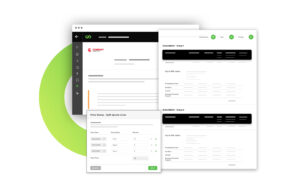
Your Digital Experience Platform (DXP) should show LTV and CAC side-by-side, in real time. With the right data, you can:
- Compare Acquisition Channels by Return
Break down CAC and LTV per channel—see who delivers long-term value and who just burns spend. - Shift Spend to High-Return Sources
Pause low-performing tactics. Reinvest in content, organic, or referral campaigns with higher LTV. - Test & Learn in Real Time
Run experiments and measure how fast CAC pays off—and whether those customers expand or churn.
When you optimize based on LTV:CAC, every dollar works harder.
Why It Matters to Growth and Marketing Teams
- Budget Allocation Becomes Strategic: No more guessing—know which channels actually drive profitability.
- Revenue Becomes Predictable: You forecast not just pipeline, but lifetime value by cohort.
- Customer Quality Improves: Focus on acquiring customers that are easier to retain and upsell.
- Team Alignment Grows: Marketing, Sales, and CS rally around a shared growth metric.
This is how you build compounding growth instead of funnel churn.
CAC vs LTV: Why the Ratio Matters Most
Metric Feature | Customer Acquisition Cost (CAC) | Lifetime Value (LTV) | LTV:CAC Ratio |
Measures Spend Efficiency | ✅ | ❌ | ✅ |
Measures Revenue Impact | ❌ | ✅ | ✅ |
Signals Channel Health | ❌ | ❌ | ✅ |
Guides Budget Allocation | ❌ | ✅ | ✅ |
Indicates Sustainable Growth | ❌ | ❌ | ✅ |
Frequently Asked Questions (FAQs)
What is a good LTV:CAC ratio?
A healthy benchmark is 3:1—for every $1 spent acquiring a customer, you gain $3 in value over their lifecycle.
Why can’t I just track CAC?
CAC alone shows cost, not value. A low CAC with low LTV still leads to negative ROI.
How do I calculate LTV?
LTV = Average Revenue per Customer × Gross Margin × Customer Lifespan.
Can this be automated?
Yes. A modern analytics platform can track both metrics in real time, segmented by source, persona, or cohort.
How does this help with retention?
By identifying high-LTV segments, you can prioritize resources toward customers who deliver long-term value.
Ready to fix leaks, speed up quoting, and unlock hidden revenue?
Use our RoI Calculator to see where your business can grow next.