
Instant Service Portal Access: Delight Customers With Faster Parts and Support

Support That Moves as Fast as Your Customers
Customers want quick fixes, not callbacks. When service partners can instantly access asset records, raise tickets, and order parts from a unified portal, response times improve and customer trust grows. A Digital Experience Platform (DXP) reduces downtime, streamlines issue resolution, and positions your team as a reliable extension of theirs.
Why Service Bottlenecks Are Killing Customer Loyalty
In manufacturing, uptime isn’t just a goal—it’s a contract.
But here’s what’s happening behind the scenes:
- Customers wait days for a response
- Technicians bounce between systems for part numbers
- Email threads spiral out of control
- Phone calls and tickets overlap, creating confusion
The result?
- Missed SLAs
- Frustrated customers
- Lost renewals and referrals
The Real Problem: Fragmented Tools = Fragmented Support
Your team may be working hard, but the tools are working against them:
- Account data lives in one system, equipment data in another
- Knowledge bases aren’t connected to the service experience
- Ticketing systems require manual entry and rework
- Customers ask for updates you can’t easily give
The outcome: delays, duplicated effort, and damaged trust.
The Fix: A Unified Service Portal That Does It All
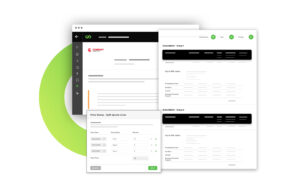
Modern DXP-powered service portals consolidate everything into one experience. That means:
- Instant Account Switching
View any customer’s profile, install base, and asset status in seconds. - Built-In Troubleshooting Content
Technicians see contextual eLearning and how-to guides alongside equipment history—no tab switching. - Raise Tickets and Order Parts in One Screen
Log an issue, check real-time inventory, choose shipping, and submit—all without leaving the portal. - Self-Serve Tracking for Customers
Buyers can view part delivery status, case updates, and service activity directly—no emails required.
This reduces ticket volume, eliminates confusion, and builds trust at scale.
What Service Ops and CX Teams Gain
By removing the swivel-chair effect and making critical tools available in one place, you unlock:
- Faster First-Time Fixes
Technicians resolve more issues on the first visit, cutting rework and field costs - Reduced Ticket Volumes
Embedded content and transparent updates deflect repetitive inquiries - Happier Technicians
No more juggling systems or chasing support documentation - Happier Customers
They feel seen, supported, and confident in your service capabilities
Traditional Support vs Unified Service Portal
Feature | Traditional Service Flow | Unified DXP Portal |
Account & Asset Lookup | Manual, multi-system | Instant, from one interface |
Knowledge Access | Separate knowledge base | Embedded beside asset history |
Ticket & Part Ordering | Separate systems | One screen, real-time inventory validation |
Customer Communication | Email, phone, and spreadsheets | Self-serve status and order updates |
Technician Efficiency | Slowed by system switching | Accelerated through guided workflows |
Frequently Asked Questions (FAQs)
What is a service partner portal?
It’s a centralized, self-service platform where service teams can access customer data, raise tickets, order parts, and track updates—all in one place.
How does this improve first-time fix rates?
By combining asset history with troubleshooting tools and parts ordering, technicians are equipped to resolve issues faster—often on the first attempt.
Can this reduce service-related support tickets?
Yes. When customers can view order statuses and service progress directly, it deflects basic “where is my part?” or “what’s the update?” inquiries.
Is this just for field service teams?
No. It benefits customer support, order management, and even sales teams by giving shared visibility into account activity.
What’s the ROI of a unified portal?
Fewer delays, fewer escalations, and higher NPS scores all drive stronger retention and lower support costs.


Ready to fix leaks, speed up quoting, and unlock hidden revenue?
Use our RoI Calculator to see where your business can grow next.